What Killed Blackboard
How a six-year cloud migration without deployment automation turned a $3 billion EdTech acquisition into a $1.7 billion bankruptcy — and what the divested business unit that built the pipeline did differently.

In September 2025, Anthology — the company that owned Blackboard, the most recognized name in education technology — filed Chapter 11 bankruptcy with $1.7 billion in debt and annual interest payments consuming 41% of total revenue. Five months later, it emerged as "Blackboard, Inc." — debt-free, stripped of two of its three business segments, sold for a combined $120 million, and backed by $70 million in new financing from distressed-debt investors Oaktree Capital and Nexus Capital.
The same month Anthology filed for bankruptcy, a former Blackboard business unit — Transact Campus, divested in 2019 for $720 million — was completing its integration into Roper Technologies following a $1.6 billion acquisition. Same parent company. Same industry. Same compliance requirements. Opposite outcomes.
The difference was not strategy. It was not market timing. It was not product vision. The difference was whether the organization had built the operational infrastructure to deploy software reliably across multiple environments at scale — and what happened when it hadn't.
The Rise and Entrenchment
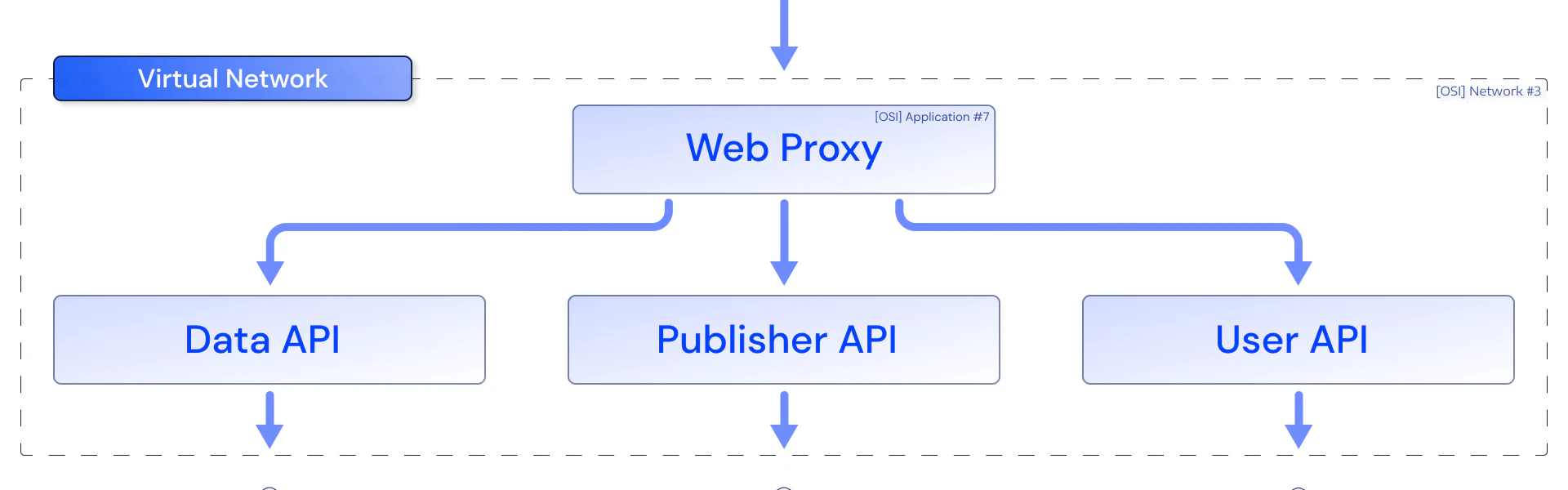
Blackboard was founded in 1997 by Michael Chasen and Matthew Pittinsky. Within two years it had merged with CourseInfo, gone to market as the first commercial learning management system, and begun acquiring everything in its path. Prometheus in 2002. WebCT — its primary competitor — in 2006 for $180 million. ANGEL Learning in 2009. By 2006, Blackboard was installed on more than 65% of U.S. college campuses, according to ListedTech's historical market share data. Between 2006 and 2012, the company spent over $500 million on acquisitions.
The company went public in 2004 (ticker: BBBB) and was taken private in 2011 by Providence Equity Partners for $1.64 billion. As Phil Hill at e-Literate later observed, when a private equity firm acquires a company like Blackboard, "they do so by essentially taking out a giant mortgage" — the debt that would define the next decade was introduced here, not with Anthology.
Blackboard's market dominance during this period was real but fragile. In 2006, the company obtained a broad patent on internet-based education support systems and promptly sued Desire2Learn (now D2L) for infringement. The case dragged through the courts for three years — Blackboard won a $3.1 million jury verdict in Texas in 2008, only to have the Federal Circuit invalidate the patent claims in 2009 for indefiniteness. The lawsuit alienated the open-source community, energized competitors, and signaled to the market that Blackboard's strategy was more about protecting installed base than earning it.
By the time Providence took Blackboard private, the cracks were already showing. Canvas, launched by Instructure in 2011, was cloud-native from its first line of code. It didn't need a migration strategy because there was nothing to migrate from.
The Migration That Never Ended
Blackboard announced its move to a fully SaaS model on AWS in 2014. The goal was straightforward: migrate all clients off self-hosted and managed-hosting deployments to a multi-tenant cloud architecture.
Six years later, by mid-2020, only about half of clients had migrated to SaaS — roughly 844 out of ~1,700, according to Phil Hill's analysis of Blackboard's own numbers. The company was running three completely different deployment models simultaneously:
- Self-hosted: Customers running Blackboard on their own data centers
- Managed-hosting: Blackboard operating dedicated instances in its own data centers
- SaaS: Multi-tenant cloud deployment on AWS
Each model required different code paths, different support structures, different security configurations, and different operational procedures. As Phil Hill documented at the time: the company had "an albatross around their neck with the need to support different code bases and deployment models."
This was not a technology problem. It was a deployment orchestration problem. The company was trying to migrate thousands of institutional clients to the cloud without a system that could manage the migration itself.
Meanwhile, market share was in free fall. In 2018, Canvas tied Blackboard at 28% of the U.S. and Canadian higher ed market, according to Phil Hill's market analysis. By 2019, Canvas had surpassed Blackboard. By the end of 2024, the numbers were devastating: Canvas held 50% of the market by enrollment, D2L Brightspace had risen to 20%, and Blackboard had cratered to 12%. By spring 2025, Edutechnica reported that Canvas had achieved a milestone: greater market share than its next three competitors combined.
Blackboard went from 70% market share to 12% in under two decades. The LMS that had once been synonymous with online learning was now a distant third.
Three Deployment Models, Zero Automation

The evidence of operational paralysis accumulated publicly:
Software that hadn't been updated in two years. Blackboard's worst outage in years, in April 2020, was traced to infrastructure that had gone untouched for 24 months. Phil Hill attributed the outage to "software that had not been updated in two years" and described it as illustrating "the risk of having your cake and eating it, too" — maintaining multiple deployment models while lacking the automation to keep any of them current. In an industry where competitors were shipping weekly, Blackboard had environments that hadn't seen a deployment in two years — not because nothing had changed, but because deploying was too risky and too manual to attempt without a crisis forcing it.
Forced migration without migration capability. In July 2020, Blackboard announced that self-hosted support would end by December 2023 and managed-hosting by December 2022. Phil Hill noted that "Blackboard has not been willing to make the difficult decision to force clients off of older hosting models, meaning that the company has increased the number of deployment options they have to support." When Blackboard finally did set deadlines, the response at BbWorld was telling: the first audience question led to "a very long discussion about long-term self-hosted customers who just don't have the resources to migrate." Institutions that had been promised indefinite support were told to migrate anyway — without the tooling to make migration manageable.
Overprovisioning as the default. When COVID-19 drove a 4,800% increase in Blackboard Collaborate usage — concurrent users jumping 45x in four weeks — the company's response was documented in their own AWS case study. "We had entire countries shifting to online learning overnight," said Kris Stokking, VP of Software Engineering at Blackboard. The company's initial response was to overprovision. As AWS noted: "Blackboard erred on the side of overprovisioning; in the long term, however, the company needed a more cost-efficient solution." They eventually implemented autoscaling, AMD instance optimization, and Spot Instances — achieving a 28% cost reduction on media processing — but this was reactive optimization of a single product, not systematic infrastructure-as-code across the entire estate.
Every feature, every security patch, every performance optimization had to be tested and deployed three different ways. The combinatorial explosion of configurations — three hosting models times two UI versions times thousands of institutional customizations — was not a scaling challenge. It was an impossibility without automation.
The $3 Billion Bet That Compounded the Problem

In October 2021, Anthology — a company formed by Veritas Capital and Leeds Equity Partners in 2020 through a roll-up of Campus Management, Campus Labs, and iModules — acquired Blackboard for approximately $3 billion. The acquisition was funded almost entirely by debt. Veritas became the majority owner.
The thesis, as then-CEO Jim Milton stated, was to create "the most comprehensive ed-tech ecosystem across academic, administrative and student engagement applications." The bet was that universities would want to buy their LMS, SIS, and CRM from the same vendor — a bundled "cradle-to-career" platform.
The thesis was wrong.
Phil Hill, the most widely cited EdTech market analyst, explained it to Inside Higher Ed: "Anthology assumed that by combining the LMS, SIS and CRM that they would get a lot more cross-selling. What they misunderstood was that academics — the deans, provosts and faculty — really pick the LMS and they're not going to pick an LMS because the registrar and chief information officer picked a different SIS. That synergy they were looking for just really didn't exist."
ListedTech's data proved this empirically: only 5 institutions used products across all three Anthology business segments. Five. Out of thousands. The cross-sell strategy that justified a $3 billion acquisition — supported by $1.7 billion in debt — produced essentially zero cross-selling.
What Anthology inherited:
- An incomplete SaaS migration seven years in
- Three deployment models requiring parallel operational support
- A declining market share — 12% and falling — against Canvas (50%) and D2L Brightspace (20%)
- 30+ products with overlapping codebases across the combined entity
- $1.7 billion in debt requiring $185 million in annual interest payments
The capital structure, revealed in court filings and analyzed by ElevenFlo, was:
- 1st Lien Superpriority Credit Agreement: ~$1.2 billion
- 2nd Lien Credit Agreement: ~$423 million
- Revolving Credit Facility: $100 million (fully drawn)
- Debt-to-EBITDA ratio: exceeding 400x by FY2025
The financial trajectory was swift and brutal:
- Revenue: $530M (FY2023) → $450M (FY2025) — down 15%
- EBITDA: $33M → $4M — down 88% in two years
- Annual interest payments: $185M — 41% of total revenue
- Net losses over two years: approximately $80 million, per court filings
By December 2024, Anthology skipped its interest payment on the second lien. By March 2025, it skipped the first lien too — and two lenders failed to honor $18.5 million in lending commitments. Veritas Capital effectively walked away. Distressed-debt investors Nexus Capital and Oaktree Capital entered to steer the restructuring. By September 2025, it filed Chapter 11.
The court filings tell the story in one ratio: $185 million in annual interest on $4 million in EBITDA. The company's operating profit couldn't cover a single week of debt service.
Why Competitors Survived — and Thrived

The competitive landscape makes the operational failure visible:
Canvas (Instructure) was built cloud-native from its founding in 2008. No migration problem. No legacy deployment models. One codebase, one deployment pipeline, simultaneous feature delivery to all customers. Canvas was taken private by Thoma Bravo in 2020 for $2 billion, then sold to KKR in 2024 for $4.8 billion — a 140% increase in valuation in four years. Instructure's trailing twelve-month revenue reached $634 million at the time of the KKR deal. By spring 2025, Canvas held 50% of the US/Canadian higher ed LMS market by enrollment — more than its next three competitors combined.
D2L Brightspace made the painful decision to force all clients off self-hosting and managed-hosting to pure AWS-based SaaS over 3-4 years. Phil Hill contrasted this directly with Blackboard: "D2L took a different path and has entirely migrated their client base from self-hosting and managed-hosting to pure AWS-based SaaS hosting over the past 3-4 years. D2L lost some clients along the way based on this approach, but they are now a true cloud-based LMS company." D2L reported $217 million in annual revenue for fiscal 2026, subscription revenue growing 9% year-over-year, and total debt of just $723,000 (that's thousands, not millions). D2L Brightspace passed Blackboard for second place in the LMS market by enrollment in 2024, driven partly by system-wide migrations at SUNY and CUNY away from Blackboard.
Blackboard tried to avoid the hard decision — maintaining legacy deployment models to retain customers while simultaneously migrating to the cloud. Without deployment automation to manage this complexity, they ended up with the worst of both worlds: the operational costs of three deployment models and the competitive disadvantage of slow feature delivery.
The pattern is clear in the numbers: D2L, which forced the migration, has negligible debt and iterates rapidly. Canvas, which never needed a migration, commands a $4.8 billion valuation. Blackboard, which delayed the migration, accumulated $1.7 billion in debt and filed for bankruptcy.
The Divested Business That Built the Pipeline
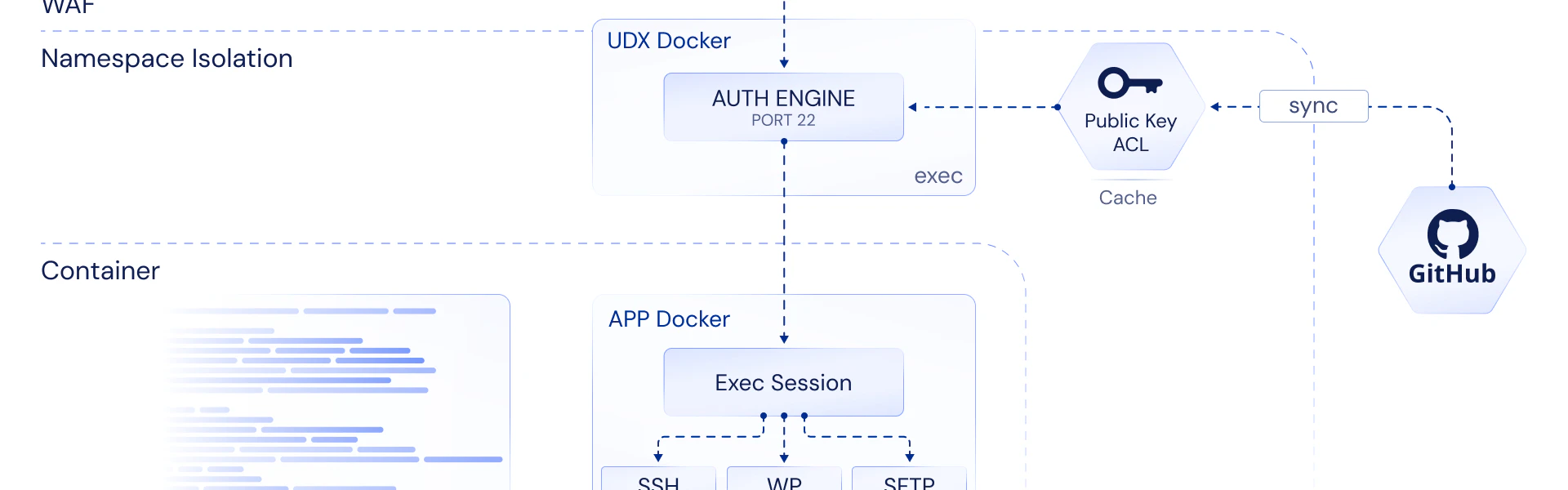
In April 2019, Blackboard divested its Transact business unit — the payments and campus commerce division — to Reverence Capital Partners for approximately $720 million.
Blackboard Transact handled students' financial information, banking data, and controlled the physical access systems that lock and unlock doors across campus. This was the closest thing to critical infrastructure outside the DOD — not a consumer app where a breach means you apologize and offer credit monitoring. PCI DSS and SOC 2 compliance were not optional.
The division's operational maturity at the time of divestiture mirrored the parent company's. Products across three verticals were either not releasing automatically or doing ArgoCD-style GitOps that only reconciled within Kubernetes. There were no solutions to spin up or manage resources outside of Kubernetes. The platform wasn't running on Kubernetes at all — it was running on Azure Service Fabric, Microsoft's pre-Kubernetes container orchestrator, now deprecated with a migration deadline of March 2027.
What got built after divestiture was a release orchestration pipeline aligned with how the organization actually worked:
- Developers handed off feature builds to the QA team
- QA signed off on the story and release, then handed it to User Acceptance Testing (UAT)
- UAT was managed by a completely different department
- That department ensured the release could reach production
- At each stage, approvals were required before the release could proceed further
Each product ended up with five to seven environments in its pipeline. The pipeline took code developers wrote, packaged it into deployable artifacts, and deployed in sequence — with rules, state awareness, and explicit halt conditions at every phase. It produced all artifacts and evidence any PCI DSS or SOC 2 auditor would ever ask for. Pipeline phases were aligned with organizational departments and procedures: it was clear when work was handed off and who was responsible for approval.
The compliance drivers were real. PCI DSS Requirement 6.4 mandates separate development and test environments, testing of security impact, and separation of duties. SOC 2 CC8.1 requires formal authorization of production changes. The institutional client base demanded this — universities handling financial aid, meal plans, and physical access control need to prove that different versions of code are tested in different environments before reaching production.
The results were measurable:
- Time from developer finishing work to customer delivery: one year down to under a week (sometimes a day)
- Tracked deployments: single digits to 30,000+ per year (DORA classifies elite at 1,460/year — this was 20x elite)
- Developer experience: settings were easy to find, easy to iterate on, and integrated into whatever interface developers already used
- Every deployment was tracked, versioned, and deployable into other environments — environments that represented lifecycle stages with organizational controls
The business trajectory, documented in Transact's press releases and Roper Technologies' SEC filings:
- April 2019: Divested for ~$720M (Reverence Capital, with $300M+ in equity)
- June 2023: 1 million mobile credentials provisioned, representing over 80% of the mobile student ID market, with $230M+ processed through mobile credentials
- 2024: 1,800+ institutions, $49B+ in annual payments processed, 250M+ contactless transactions
- August 2024: Acquired by Roper Technologies for $1.6 billion (projected $325M revenue, $105M EBITDA)
Roper already owned CBORD — Transact's biggest competitor, acquired in 2008 for $367 million. CBORD served 750 colleges and 1,700 healthcare licensees. The combined entity now dominates a campus card systems market valued at $1.65 billion globally.
While Anthology's Blackboard was losing $80 million in revenue and watching EBITDA collapse by 88%, the former Blackboard division that built the deployment pipeline more than doubled its valuation.
Technical Debt Becomes Financial Debt

Blackboard's bankruptcy is typically discussed as a private equity story — leveraged buyout, excessive debt, declining market. That framing is accurate but incomplete. The debt was serviceable if the business could grow or even maintain revenue. It became fatal because the business couldn't execute.
And it couldn't execute because it lacked the operational infrastructure to do so.
Without deployment automation, cloud costs become unmanageable. The structural economics tell the story: revenue declined 15% while EBITDA collapsed 88% — from $33 million to $4 million. Costs weren't scaling down with the business; they were scaling up against it. When every environment is manually configured, overprovisioning becomes the default because the cost of an outage — manual investigation, manual rollback, manual redeployment — vastly exceeds the cost of spare capacity. The AWS case study confirms this was Blackboard's actual behavior during the only period they publicly documented their cloud operations.
Without infrastructure-as-code, every environment is a snowflake. A security patch that works in the SaaS environment breaks the managed-hosting environment because someone made a manual change six months ago that was never documented. The patch for managed-hosting breaks a self-hosted client because their Java version is two years behind. Each fix creates a new configuration branch. The configuration space grows faster than the team can map it.
Without deployment visibility, you can't trace what changed. When Blackboard's worst outage hit in April 2020 — traced to software unchanged for two years — the diagnosis itself was the tell. In a system with deployment records, the answer to "what changed?" is immediate. In a system without them, the answer is "we're not sure, but we think nothing changed, and that's actually the problem."
The iteration speed problem compounds everything. Without deployment automation, the feedback loop between identifying a problem and validating a fix stretches from hours to weeks. Developers stop experimenting. Product teams stop requesting features. The organization enters a defensive posture where the primary goal is avoiding breakage, not delivering value. Revenue declines follow.
As Joseph Licata, founder and CEO of Canyon GBS, told Inside Higher Ed: "Anthology's bankruptcy reflects the financial and operational strain created when education technology companies scale primarily through acquisition rather than disciplined product and engineering strategy. Managing overlapping architectures, redundant services, and different code bases significantly increases costs and slows innovation."
The Sequencing Error
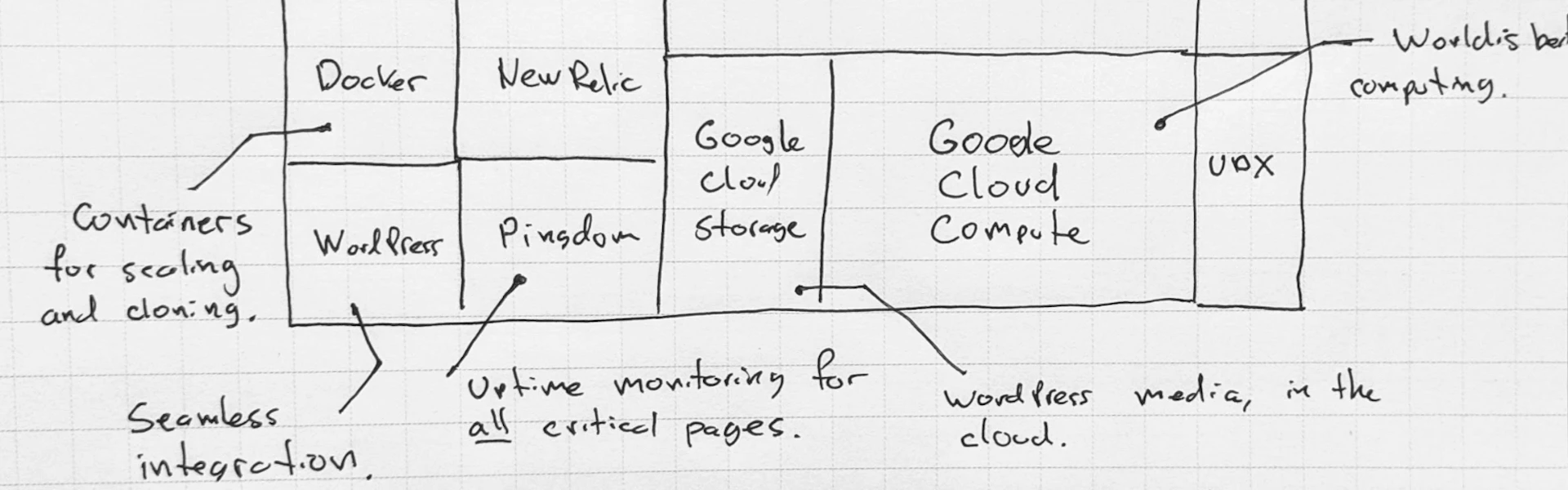
Blackboard made a critical sequencing error that is common in enterprise cloud migrations:
They announced the destination before building the road.
The SaaS migration was announced in 2014. The deadline for self-hosted support was set for 2023. The Ultra UI migration was launched in parallel. But the deployment automation — the system that would make all of these transitions manageable, traceable, and fast — was never built.
The result was predictable: forced migrations without the operational capability to support them. Institutions were told to migrate, but the migration process itself was manual, fragile, and under-resourced. The support burden of running three deployment models consumed the engineering capacity that should have been building the pipeline to eliminate them.
Phil Hill identified this dynamic in real time: "One challenge Blackboard faces is that with their market losses over the years, this conservative type is a greater and greater percentage of their remaining customer base." The customers least able to migrate were the ones most likely to still be on Blackboard — and the ones who would need the most operational support during migration. Without automation, this was a death spiral.
Compare this to the approach that worked at Transact: build the pipeline first, then use it to accelerate everything else. The pipeline made deployments easy, traceable, and fast. Developers adopted it because it solved their immediate bottleneck. Product teams used it because it turned "deploy to five environments" from a project into a button press. The pipeline was the prerequisite for everything that followed.
This is not specific to education technology. It is the fundamental lesson of every failed enterprise cloud migration: the migration tool is not the cloud provider. It is the deployment pipeline.
What GitOps Couldn't Do
The GitOps model — put desired state in Git, let a controller reconcile the cluster — appears to solve the deployment problem. It is elegant for a single Kubernetes cluster with a stable configuration.
But Blackboard's challenge was never a single Kubernetes cluster with a stable configuration. It was:
- Three fundamentally different deployment models requiring different operational procedures
- Hundreds of institutional clients with different configurations, compliance requirements, and migration timelines
- Infrastructure spanning Kubernetes, bare metal, managed hosting, and client-operated data centers
- A UI migration happening simultaneously with a hosting migration
- Compliance and data residency requirements that varied by institution and jurisdiction
GitOps addresses one dimension of this problem — the Kubernetes dimension — and treats the rest as someone else's problem. The reconciliation loop answers "does the cluster match Git?" It does not answer "has this institution been migrated safely?" or "does this configuration work in all three deployment models?" or "can we roll back this institution without affecting the 200 institutions sharing the same SaaS tenant?"
What Blackboard needed was not a reconciliation controller. It was an orchestration pipeline — one that could manage deployments as ordered, stateful operations across heterogeneous infrastructure, with explicit halt conditions, promotion gates, and audit evidence generation. The kind of pipeline where environments are runtime parameters, not Git paths — where adding a new institutional environment means adding a YAML file, not spinning up new infrastructure, new credentials, and new operational procedures.
The core issue is deeper than tooling. Organizations don't need deployment automation for CI/CD. They need it to prove they have a sound process. Every change must be traceable. Every change must be tested exhaustively before deployment. Changes must be manifested and declared as artifacts with sequential versioning. A proper pipeline has sequential phases aligned with organizational structure — and Git alone isn't sufficient, because what gets done in Git isn't all that's needed for a release to be deployed into production.
GitOps reconciliation tools solve the wrong problem for regulated environments. They answer "does the cluster match the repo?" They don't answer "has this change been approved by QA, tested by UAT, and authorized for production by the release management team?" In an environment governed by PCI DSS and SOC 2, the second question is the one the auditor asks.
GitOps is deceptively simple. It solves the demo perfectly. But at enterprise scale — with multiple deployment models, compliance boundaries, cross-platform workloads, and hundreds of tenant configurations — the simplicity becomes the constraint. The things it doesn't handle are the things that determine whether a cloud migration succeeds or fails.
The Bankruptcy Arithmetic
Here is the arithmetic that killed Blackboard:
- Revenue: $450 million and declining 8% annually
- Interest payments: $185 million (41% of revenue)
- EBITDA: $4 million (before interest)
- Debt-to-EBITDA: 400x+
- Gap: -$181 million per year
No amount of cost cutting closes a $181 million annual gap on a $450 million revenue base. The company would have needed to grow revenue by 40% while simultaneously eliminating nearly all operational overhead. That was structurally impossible for an organization that couldn't deploy a software update without manual intervention across three different infrastructure models.
The private equity structure made the math fatal, but the operational immaturity made the math inevitable. A company that could deploy rapidly, iterate on features, onboard clients quickly, and optimize cloud costs could have grown into its debt. Blackboard couldn't do any of those things.
The emergence from bankruptcy in February 2026 tells the final chapter: Blackboard sold its SIS and ERP business to Ellucian for $70 million and its CRM and student success business to Encoura for $50 million. The combined sale price for two of three business segments was $120 million — 4% of the $3 billion acquisition price four years earlier. The cross-sell thesis that justified the entire acquisition was unwound for pennies on the dollar.
What remains is a debt-free entity called "Blackboard, Inc." — the LMS, Ally, and institutional effectiveness tools — backed by $70 million in new capital from Oaktree and Nexus, with Matt Pittinsky, the co-founder who started the company in 1997, set to return as CEO once his non-compete with Instructure expires. It is, as Phil Hill described it, a "financial reset" — but the strategic reset is still to come.
Same Industry, Opposite Outcomes
Blackboard (Anthology)
- Acquired for ~$3B (2021)
- No deployment automation at scale
- 7+ years of incomplete cloud migration
- Market share: 70% → 12%
- EBITDA: $33M → $4M (-88%)
- Three simultaneous deployment models
- Cross-sell: 5 institutions across all segments
- Outcome: Chapter 11 bankruptcy, emerged as diminished entity
Transact Campus
- Divested for ~$720M (2019)
- Full deployment orchestration pipeline
- Operational transformation in 2 years
- 80%+ mobile credential market share
- $325M revenue, $105M EBITDA at exit
- Unified pipeline across multiple targets
- 30,000+ deployments/year
- Outcome: Acquired by Roper for $1.6B, combined with CBORD to dominate
Canvas (Instructure)
- Cloud-native from founding (2008)
- No migration required — ever
- 50% market share by enrollment (2025)
- Thoma Bravo exit to KKR for $4.8B (2024)
- More market share than next three competitors combined
D2L Brightspace
- Forced SaaS migration over 3-4 years
- Lost some clients, gained operational clarity
- Passed Blackboard for #2 in 2024
- $217M revenue, $723K total debt
- 9% subscription revenue growth
Same industry. Same customers. Same compliance requirements. Four different approaches to the same problem. The ones that solved deployment won. The one that didn't went bankrupt.
The Lesson
Blackboard's bankruptcy is usually framed as a cautionary tale about private equity leverage, or about market disruption by cloud-native competitors, or about the difficulty of acquiring and integrating large software companies.
It is all of those things. But underneath all of them is a simpler truth: Blackboard could not deploy software reliably across its own infrastructure. Everything else — the stalled migration, the overprovisioned cloud resources, the slow feature delivery, the customer attrition, the revenue decline that made the debt unserviceable — was a consequence of that single operational failure.
The deployment pipeline is not a DevOps nice-to-have. It is not a line item that can be deferred while the organization focuses on "strategic priorities." It is the mechanism through which strategic priorities become reality. Without it, strategy is aspiration. With it, strategy is execution.
Transact built the pipeline and turned $720 million into $1.6 billion. Canvas was born with the pipeline and commands a $4.8 billion valuation. D2L forced the migration and carries $723,000 in debt. Blackboard didn't build the pipeline and turned $3 billion into bankruptcy.
The infrastructure you build to deploy your software is, ultimately, the infrastructure that determines whether your software — and your company — survives.